6 – Outbound links
Pages that link to external sites tend to rank higher. If you can link to an external site on your page, then go for it. If it doesn’t feel natural or can’t think of a relevant link to add, then you can skip this step.
7 – Images/Video
Good quality and relevant images can maximise the amount of time a visitor spends on a page, which signals Google that your website is of good quality. Each image should also be optimised.
8 – Clear design and navigation
Having a clear design that is easy to navigate will increase dwell time, so ensure that your pages are clearly structured and designed to improve your visitor’s experience.
9 – Website Speed
A website that is slow to load is bad for search engines. Google rewards fast websites with higher rankings. As a rule of thumb, a website shouldn’t take more than 2 seconds to load.
10 – Get an SSL Certificate
Having an SSL certificate makes your website “secure”. When you go to a secure site you see a padlock next to their URL. Having an SSL certificate creates trust, and helps your engine rankings.
11 – URL
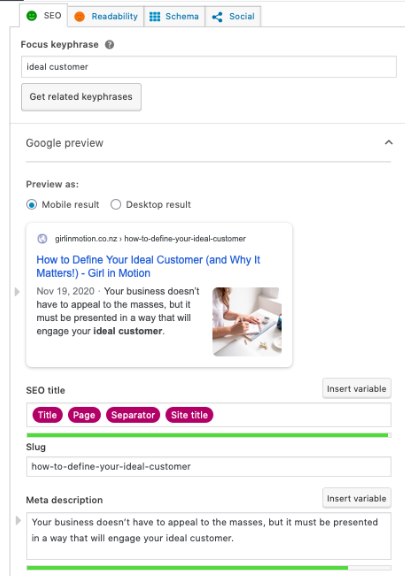
Each of your page’s URLs should include your focus keyword. So Instead of having yourwebsite.com/pageid=?123’ you would have ‘yourwebsite.com/your-keyword’.
12 – Header tags
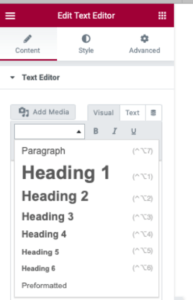
Each page should use header tags to set the hierarchy of your headings. If you are using Elementor, you can set them up by highlighting your text and selecting “Heading 1”, “Heading 2”, etc